A deployment care package for a sailor aboard ship has to survive one hard test: it has to still be interesting in week three. Candy gets eaten in the first two days. Photos go up on the bulkhead (the wall of his rack space) and stay there. What keeps a guy sane on a long underway are the things that fill an empty hour — offline games, a craft he can pick up and put down, and study material that moves his career forward while the ship moves him across an ocean.
I spent years on ships as a Cryptologic Warfare Officer, and I made Lieutenant partly because of what I did with dead time at sea. Here’s what actually earns its space in a box.
Balance Solo and Social in the Deployment Care Package
Shipboard life splits into two kinds of time. There’s the hour alone in his rack before lights out, and there’s the mess decks or the berthing lounge where four or five shipmates are killing time together. A good deployment care package covers both.
Solo items: a paperback, a notebook, a model kit, a sketch pad. Social items: a deck of cards, dominoes, a small travel chess or checkers set, a compact board game that folds flat. Cards are the single best value in the box. Spades, hearts, and pinochle run continuously on Navy ships, and a fresh deck with a decent plastic coating will get used until the pips wear off.
- Deck of cards, plus a second as a spare
- Travel-size chess, checkers, or backgammon
- Dominoes in a soft bag
- A small magnetic travel game — magnets matter, because loose pieces roll with the ship
Crafts and Coloring Books for Stress Relief
This is the part people underestimate. A lot of sailors who never touched a craft in their lives pick one up on deployment, because there’s nothing else to do and because the work is repetitive in a way that calms you down. Adult coloring books with fine-line patterns are popular for exactly that reason. So are watercolor sets with a small brush and a pad of thick paper, and simple embroidery or friendship-bracelet kits.
Two practical notes. First, check what the ship allows — some commands restrict certain items, and anything with a strong solvent smell is a bad idea in a closed berthing space. Second, keep the craft small. Rack space is measured in inches. A shoe box of supplies is plenty; a tote bag is too much.
Puzzles, Games, and an E-Reader for Ship Deployment Activities
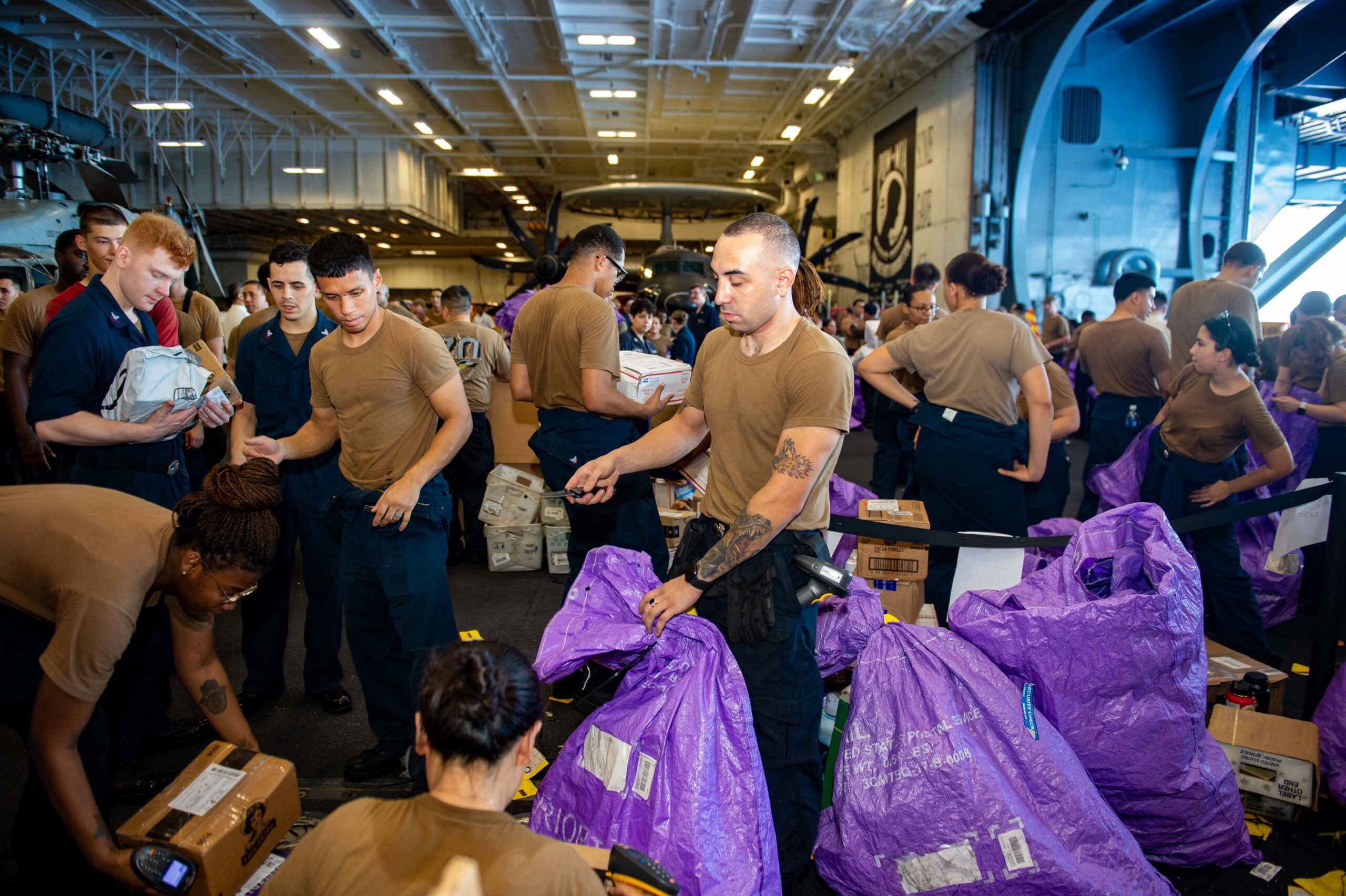
Puzzles do two things at once — they pass time and they give the brain something to chew on. Crossword and Sudoku books are cheap, light, and last weeks. A 500-piece jigsaw will get a crowd around it in the lounge within a day, though you’ll want to check whether there’s a flat surface nobody needs.
For a heavy reader, an e-reader is the best single item you can send. A Kindle or similar device holds a whole library and weighs less than one hardcover, and it charges off a standard USB cable. Load it before you ship it, and register it to an account he can add to from the ship’s connectivity when it’s available. If he’s already got one, send a gift card for books instead.
One caution on anything electronic: shipboard storage and charging rules vary by command and by space. Confirm before you buy.
PQS Study and Career Material
Here’s the item most families never think of, and it’s the one that can change his next few years. PQS — Personal Qualification Standards — are the signed-off worksheets a sailor has to complete to qualify in a watch station or a warfare pin. Every command has its own set, and completing them is what gets a sailor advanced and trusted with more responsibility.
If he’s working on a qualification, ask him what he needs. A thick binder of printed PQS, a fresh set of highlighters, a stack of index cards, a small dry-erase board for memorizing diagrams — that’s a care package that pays him back. When I was a division officer, the sailors who finished their qualifications on deployment were the ones who got the good assignments afterward. Dead time at sea is the best study time he’ll ever have, because there’s nothing competing for it.
Pair that with a plain notebook and good pens. A lot of sailors journal on deployment, and a lot more write actual letters. A handwritten letter from home gets read more than once.
- Printed PQS binder or study guide for his current qualification
- Highlighters, index cards, a small dry-erase board
- Notebook and a couple of decent pens
- Stamps and envelopes if he writes letters
What to Leave Out of the Box
Skip anything that melts, leaks, or smells. Skip glass. Skip heavy hardcovers if he’s already got an e-reader. And skip the giant box — a smaller package that arrives three times beats one monster shipment that gets crammed into a locker and forgotten. If you want the bigger picture of what your sailor is actually doing out there, the Navy OCS Journey walks through the officer training path from the inside, which helps you understand the culture he’s living in.
He’s going to be fine. Send the cards, send the coloring book, send the PQS binder nobody else thought of. He’ll know you were paying attention.