Last updated: September 4, 2026
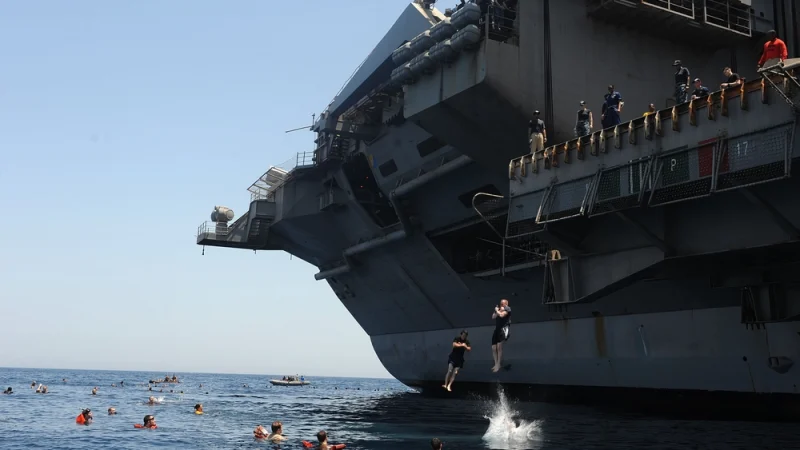
Do you need to know how to swim before Navy OCS? No — but it is strongly recommended that you can swim before you arrive. To move forward at OCS you must pass the third class swim qualification, and this post walks through exactly what that test involves and how to prepare for it.
Officer Candidate School is run by the U.S. Navy in Newport, Rhode Island. The 12-week course is designed to teach candidates about the Navy on land and at sea, and it is incredibly physically demanding — physical training starts the moment you arrive on base. PT includes running, calisthenics, and swimming, so arriving at OCS in good physical condition contributes directly to your success. If you want the full story, you can read my OCS journey series here.
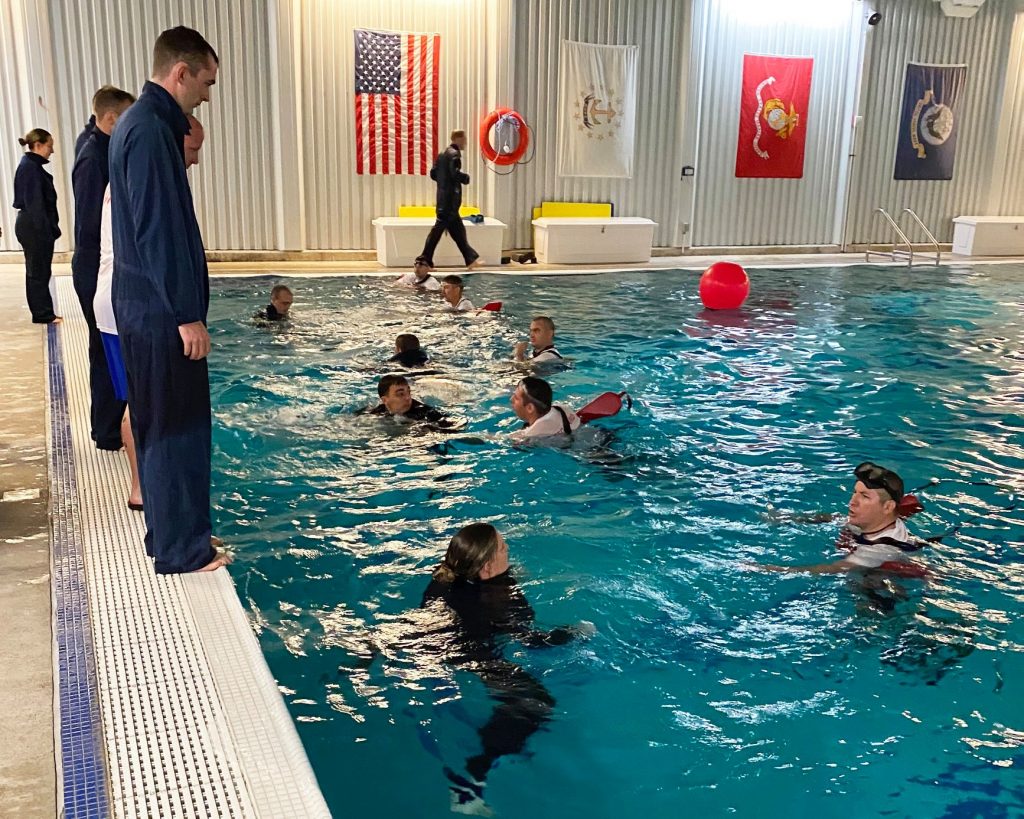
The U.S. Navy believes a sharp mind and a strong body are essential for a naval officer. The purpose of physical training during OCS is to improve endurance, stamina, and overall conditioning. To take part in training you must be within the required body-fat levels: 22 percent for men and 33 percent for women under 40. In the first two days you will complete a physical fitness assessment (PFA): height and weight measurements, sit-and-reach, curl-ups, push-ups, and a 1.5-mile run.
There are two swim qualifications: one right after the initial physical assessment, and the other around the second week of the program. Either way, there are plenty of practice sessions and lessons beforehand.
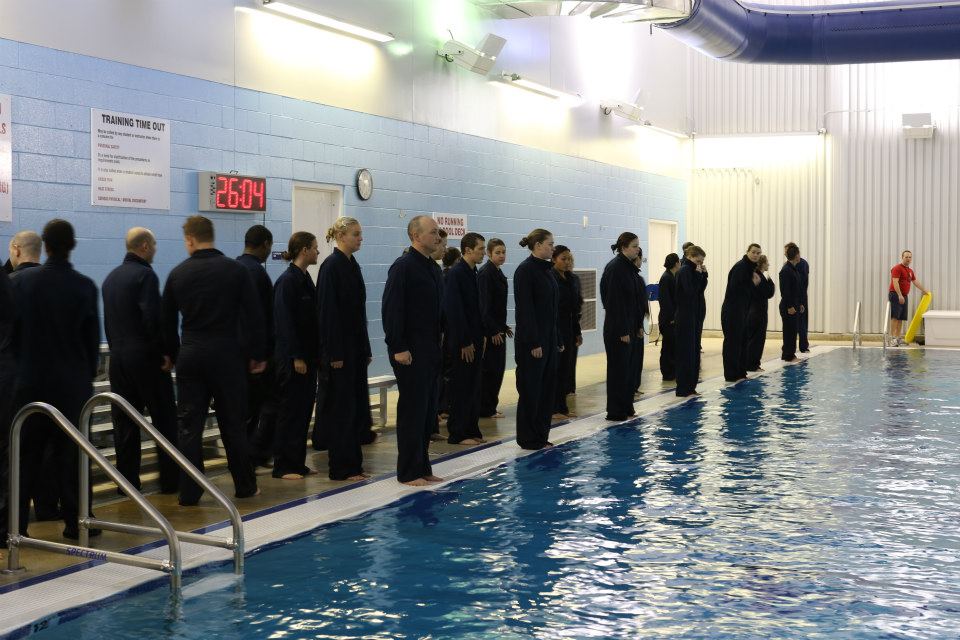
Before you can begin OCS as an indoctrination candidate, you must meet or exceed the “Probationary” performance standards for your age range and gender, so the chart varies by age.
The third class swim test
The 3rd Class Swim Test takes place during the first weeks of OCS and is repeated until you pass. It consists of four distinct parts:
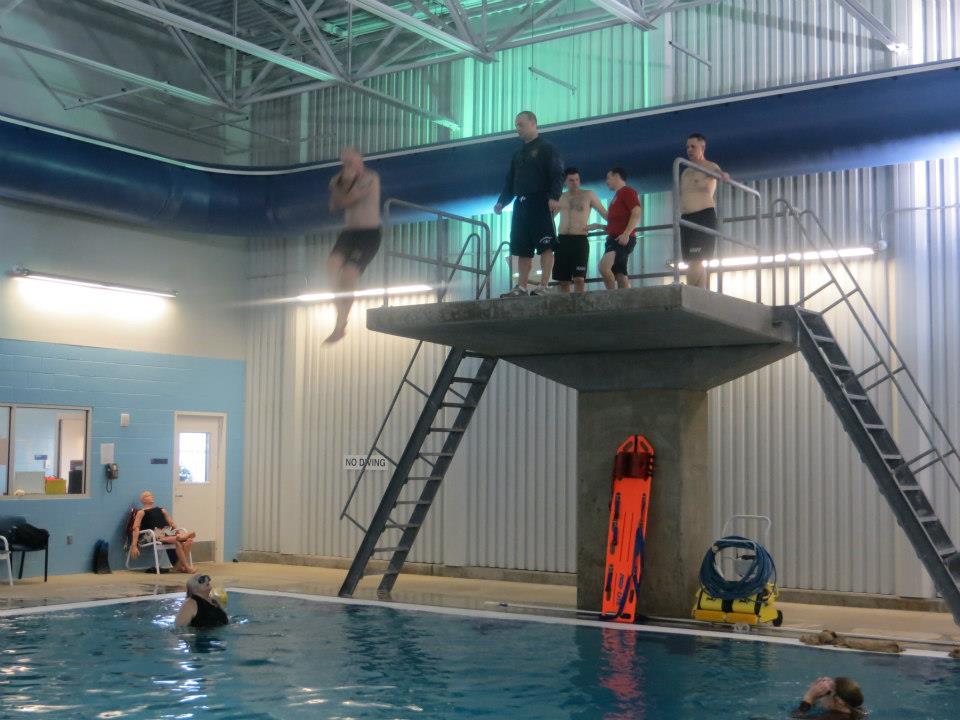
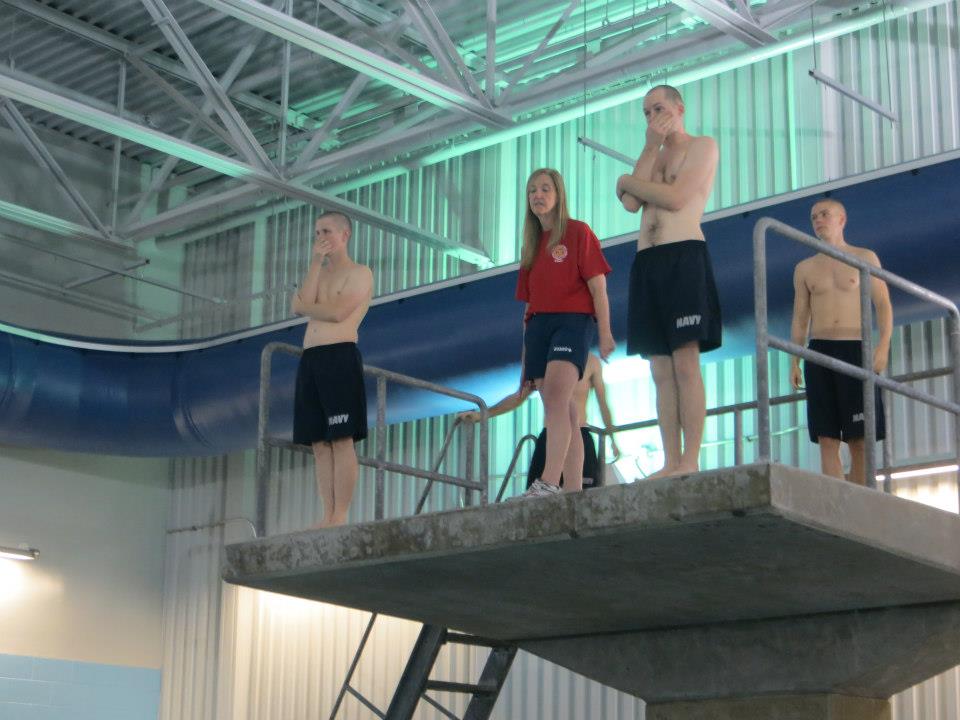
- The abandon-ship jump: you leap from a 12-foot tower to simulate abandoning ship.
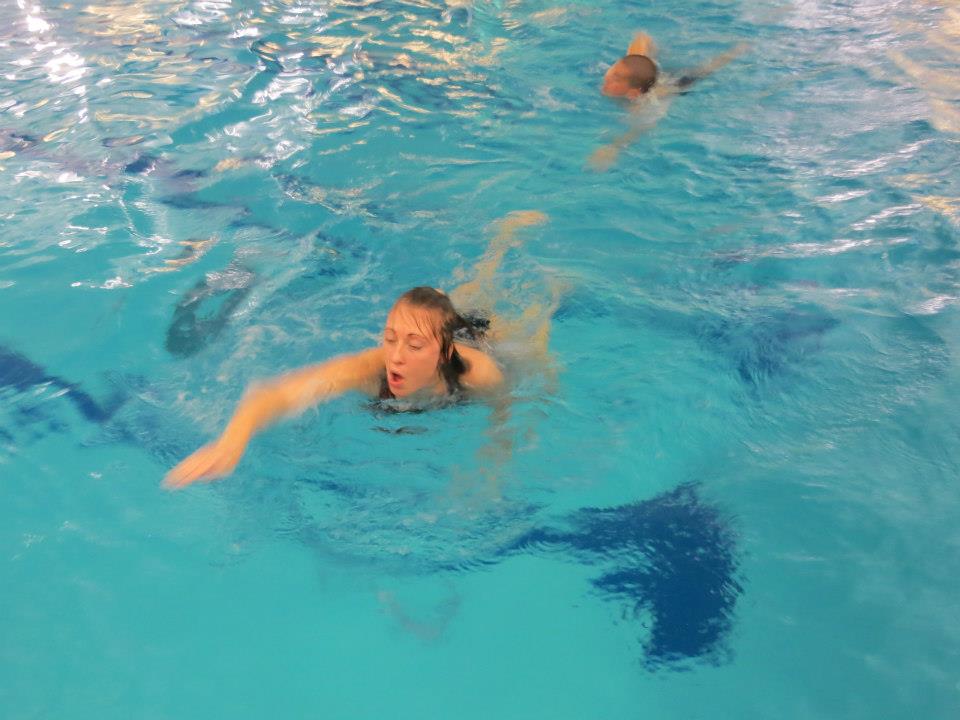
- A 50-yard swim using any combination of strokes — crawl, breaststroke, sidestroke, or elementary backstroke.
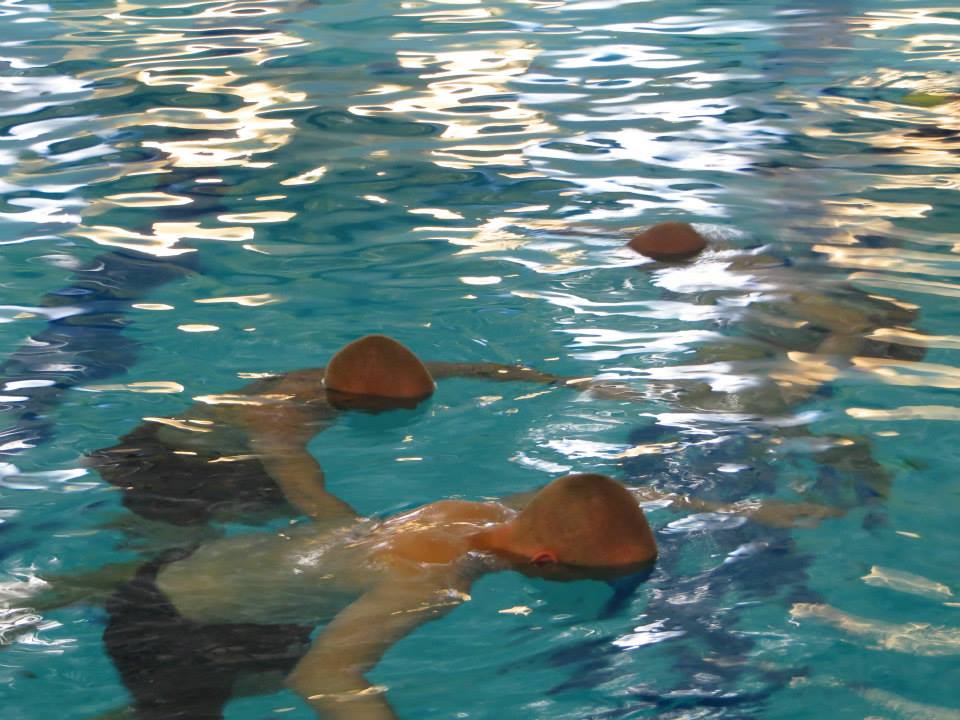
- A five-minute prone float, floating face-down using survival-floating techniques.
- A shirt-and-trouser inflation, filling a shirt and a pair of pants with air to stay afloat.
These tests are relatively simple in my opinion, even for people who are uncomfortable in the water. If you follow the advice to hold your nose and cross your arms as you leap, it keeps water out of your nose and makes it easier to surface. For the floating tests, back-float if you can — you will float either way. The one rule: do not panic!
1. The abandon-ship jump
2. The 50-yard swim
3. The five-minute face-down float
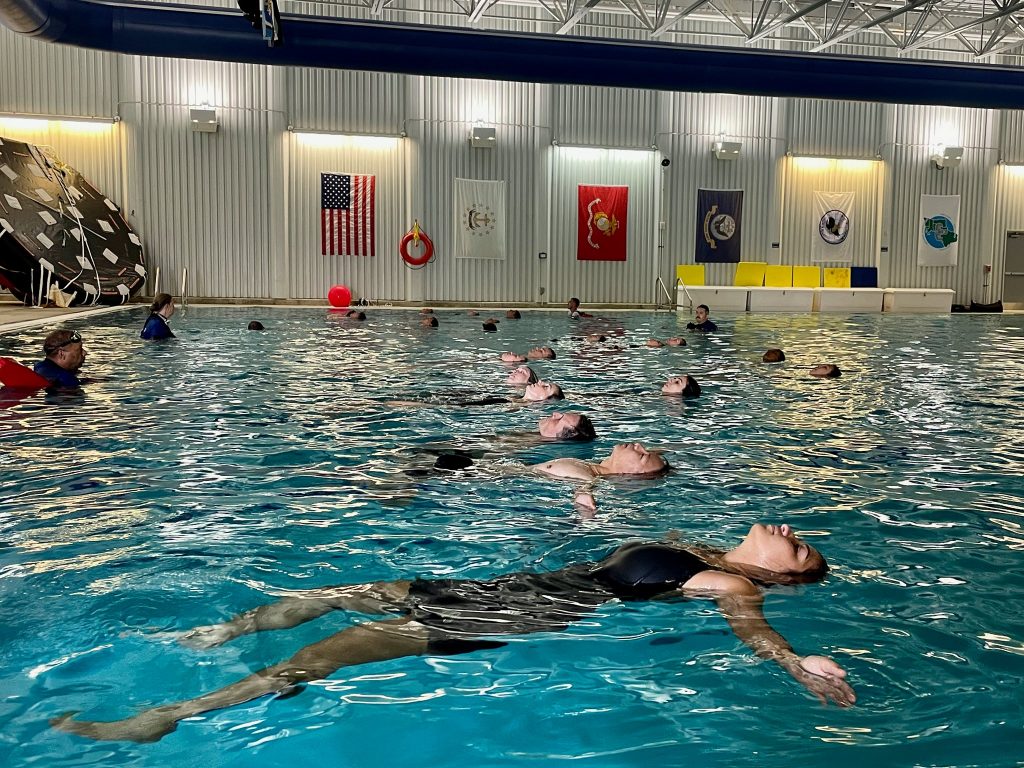
4. Shirt-and-trouser flotation
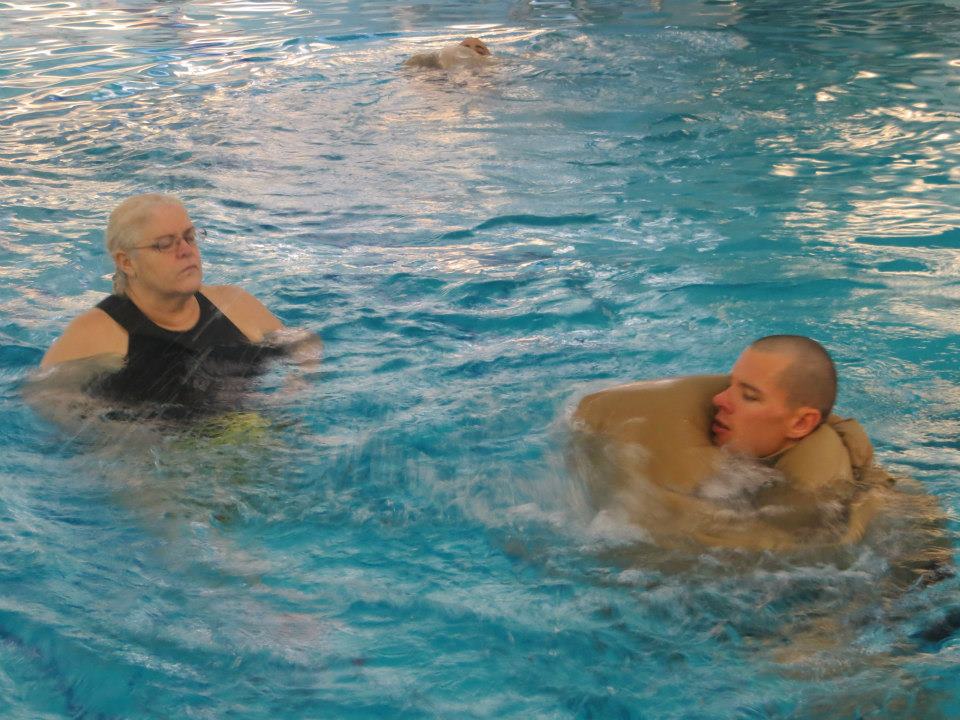
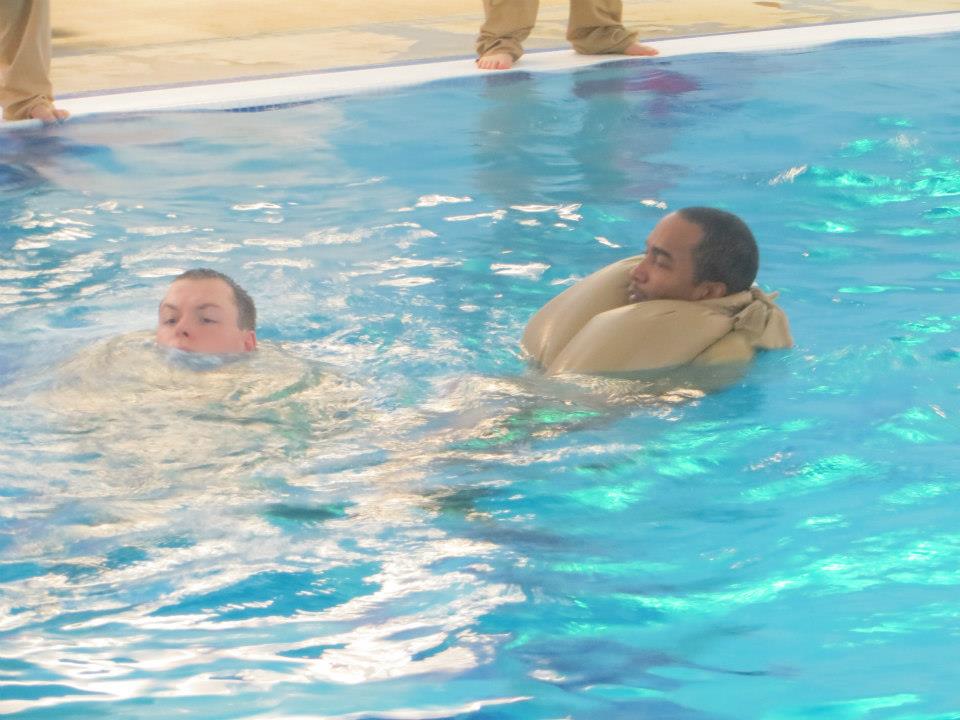
Navy swim qualification classes: 3rd, 2nd, and 1st class
OCS only requires the third class swim qualification — but the Navy recognizes three swimmer levels, and candidates often ask how they differ. Here is how the U.S. Navy defines each one.
Third class swimmer (the OCS requirement)
This is the minimum, entry-level qualification for every Sailor. It proves you can survive a man-overboard situation without a life jacket long enough to be rescued — exactly the test described above: a deep-water jump, a 50-yard swim using any of the four approved survival strokes, a five-minute prone (face-down) float, and staying afloat by inflating your shirt and trousers. Passing the third class swim test is all an OCS candidate needs.
Navy second class swim qualification
Where a third class swimmer is defined as someone who can stay afloat without a life jacket long enough to be rescued, a second class swimmer is defined as someone who can stay afloat without one indefinitely under optimum conditions. It is the entry-level requirement for small-boat operators, naval aircrewmen, and rescue swimmers — not for OCS.
You cannot test for it cold. Passing the third class swim test is required before the second class test can be administered.
The test itself is a deep-water jump followed by a 100-yard swim — 25 yards each of four strokes, swum in this order:
- Crawlstroke
- Breaststroke
- Sidestroke
- Elementary backstroke
Immediately after the swim, without leaving the water, you prone float for five minutes and then transition to a back float before exiting.
Two details catch people out. First, on the 100 you may not hold onto or rest on the side of the pool for any longer than a turn takes — walking on the bottom, or stopping to float and rest, is a failure. Second, the deep-water jump is graded at this level. On the third class test the body position is taught but not scored; on the second class test it is scored: waist straight, neck straight, eyes forward, arms crossed with one hand pinching the nose and the other gripping the opposite arm, legs straight and crossed at the ankles.
Navy first class swim qualification
The highest of the three levels, associated with roles such as a certified Navy swimming instructor, and well beyond anything OCS asks of you. It is generally described as requiring an existing lifeguard or life-saving certification, proficiency in all four strokes, and a 25-yard underwater swim.
I am deliberately not giving you an event-by-event breakdown here. The published swim-qualification standards that officer candidates and midshipmen actually train against spell out the third and second class tests in detail and do not administer first class at all — so any precise first class numbers I could put on this page would be second-hand. If you need this qualification, your command’s aquatics staff holds the current standard. Nobody reaches OCS needing it.
Bottom line: to get through Officer Candidate School you only need the third class swim qualification. The second and first class levels come later, and only if your designator or career path calls for them.
What happens if you fail the Navy OCS swim test
This is the question I get most, and the honest answer starts with how the test is built: it is modular, so “failing” is almost never all-or-nothing.
The third class qualification is administered in two modules. Module One is the deep-water jump, the 50-yard swim, and the five-minute prone float. Module Two is the shirt-and-trouser (or coverall) inflation. Module One has to be finished before Module Two, but the two do not have to happen on the same day — and the three Module One events can be run separately, in any order.
Once you pass an event, you do not repeat it. Missing the float on your first attempt does not send you back to the tower to jump again. You go back for the float.
It is also worth knowing that being pulled out of the water is not the same as failing. The standards tell instructors to remove a swimmer showing improper breathing during survival floating within the first minute, and to remove anyone struggling with shirt-and-trouser inflation before they become exhausted. That is a safety call on one event, not a verdict on the qualification.
What is written down as a failure is narrow and specific: on the distance swim, stopping, standing, or holding onto the side of the pool. On the second class 100, resting on the wall for longer than a turn takes counts too.
At OCS the practical picture is the one I described at the top of this post: the qualification comes round early, there is remedial instruction and pool time between attempts, and candidates keep testing until they pass. Weak swimmers are expected — the pipeline is built for them. What it is not built for is a candidate who arrives having never been in deep water and does not use the practice sessions.
How to prepare for the swim test before you arrive
Train for survival, not for speed. This is the single most useful thing to understand before you get to Newport. The Navy’s own standards say they are designed so that a Sailor can endure and survive for extended periods at sea, not to cover distance quickly — and they specifically warn strong swimmers to practise the prescribed survival methods rather than the technique they learned for competitive swimming. Efficient propulsion for the least energy is the whole point; the energy you save is what keeps you warm and gets you into a raft.
Concretely, in the months before you ship:
- Learn the four approved strokes — crawlstroke, breaststroke, sidestroke, elementary backstroke. For the third class 50 you can use any of them, or a combination. Sidestroke and elementary backstroke are the two most people have never done, and they are the two that cost the least energy.
- Practise in genuinely deep water. The float and the clothing inflation have to be done where you cannot stand with your mouth and nose above the surface. Practising in the shallow end teaches you nothing about the part that makes people panic.
- Rehearse the float’s breathing rhythm. The standard is breathing slightly above resting rate — roughly 20 breaths a minute — inhaling through the mouth and exhaling through mouth and nose. Gasping, erratic breathing, or swallowing water is what fails this event, not lack of fitness.
- Get used to jumping in from height. The written minimum is a five-foot jump into at least eight feet of water; the OCS tower is higher. Practise the position until it is automatic: waist and neck straight, eyes forward, one hand pinching your nose with the little finger under your chin, the other hand gripping the opposite arm, legs straight and crossed at the ankles.
- Try trouser inflation once, in a pool, in clothes, if you can find somewhere that allows it. It is a knack rather than a fitness event, and the first attempt is always the clumsy one.
You do not need to be a strong swimmer to commission — swimming is not on the list of things that keeps people out. If you are still working through eligibility, the Navy OCS requirements and eligibility guide covers what actually does. But arriving able to cross a pool without panicking turns the swim qualification from the thing you dread into an afternoon.
Nothing on this list needs kit you have to buy — a pool and a pair of old trousers covers all of it. For the gear that does earn its place in your bag, see my Navy OCS packing list.
Note: I went through OCS back in the 2010s, so some details may have changed since then — this is shared for educational purposes only. Photo credit: the Navy OCS page. (Candidates cannot use phones or electronic devices during OCS, so there is no way for a candidate to take photos there.)
This post is part of my full Navy OCS Journey series — follow it week by week from the start.