Navy OCS holiday leave is one of the first things a candidate asks about after they get their class date, and it’s a fair question. Officer Candidate School at Newport doesn’t run straight through Christmas and New Year’s. The command pauses training for a winter stand-down, usually about two weeks, and candidates get leave or duty depending on what they ask for and what the class needs. I went through OCS in Newport and spent a stand-down there myself, so here’s how it actually shook out.
What the OCS Winter Stand-Down Looks Like
Training stops. The classrooms go quiet, the drill instructors and class team take their own leave, and the regiment shifts into a holiday routine. It’s not a full release — you’re still accountable, still in uniform when you’re out in town, still subject to the same rules — but the daily grind of academics, inspections, and PT lifts for roughly two weeks.
That window is why the question comes up at all. If you’re a candidate with family across the country, a two-week break is the difference between seeing them and not. The trade-off is that everyone in the class wants the same thing, and the class can’t all be gone at once.

You Pick One Week, Not Both
Here’s the part that surprises people. The stand-down covers both Christmas and New Year’s, but candidates generally take one week or the other — not the full stretch. The class splits. Half the candidates take the Christmas block, half take New Year’s, and the ones who stay behind cover duty and keep the lights on.
If you’re trying to fly home to see parents, one week is usually enough. If you’re trying to see a spouse and kids, one week is what you get, and you make it work. The split is how the command keeps enough bodies in Newport to stand watch and handle whatever comes up.
Which week you get isn’t guaranteed. It depends on the class, the number of people who want each block, and how the class team decides to allocate it. This varies by class and by year — confirm the specifics with your chain of command once you’re in the building, not with scuttlebutt (rumor mill) from a friend of a friend.
Staying in Newport Over the Break
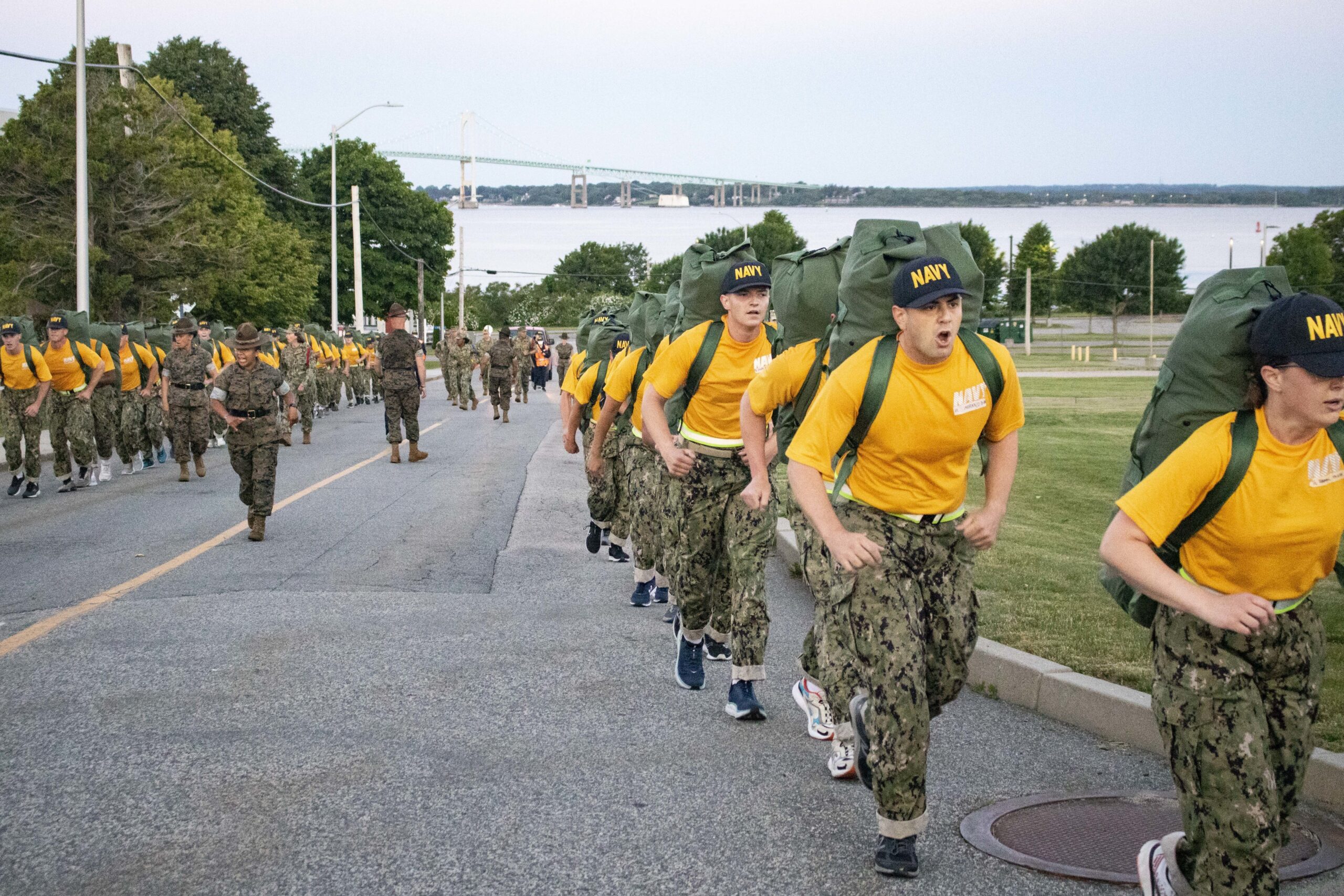
Not everyone takes leave. Some candidates live close enough that a week off isn’t worth the flight, some can’t afford it, and some just prefer to stay. If you stay, you’re not free — you pull duty, and in my experience it ran roughly every other day. That means watchstanding, checking in, and being present when your name comes up on the roster.
The rest of the time you can go out in town. Newport in December is cold and quiet, but it’s a real town with chow (food) and coffee and a movie theater, and after weeks of the OCS grind, a walk down Thames Street feels like a liberty port. Candidates who stay often end up closer to each other than they were before the break — you’re the ones still there.
- Duty rotates, typically every other day for those who remain
- You’re still in uniform and still accountable when you leave base
- Liberty hours and any restrictions are set by the class team, not by you
- Check-in requirements don’t pause just because training does
Can You Take OCS Leave in Advance?
Yes, and this is the part that trips people up. Leave accrues at 2.5 days per month, so a candidate who’s been in service for a few months hasn’t banked two weeks yet. That doesn’t automatically disqualify you. The command can approve leave in advance — you go into the hole and pay it back over the following months. It’s a normal administrative move, not a favor.
What that means practically: don’t rule yourself out because your leave balance looks thin on the first of December. Put in the request through your chain of command, be honest about your situation, and let the class team work it. The approval authority is the command, and they’ve done this before.
Who Gets Christmas Week
Having dependents matters. A candidate with a spouse and small kids at home is generally going to be prioritized for the Christmas block over a single candidate who could fly home any week. That’s not written in stone and it’s not a rule you can cite, but it’s the human logic the class team applies, and most candidates understand it once they hear it explained.
If you don’t have dependents, don’t count on getting the Christmas week. Ask for it, make your case, and be ready to take New Year’s instead. A shipmate of mine in the cryptologic community told me he volunteered for the New Year’s block his whole time at OCS precisely because he knew the parents in his class would want Christmas — and he got exactly what he asked for, with no hard feelings.
The whole stand-down is one piece of a much longer pipeline. If you’re still figuring out what the road looks like from application to commissioning, the Navy OCS Journey hub walks through it end to end.
Bottom line: Navy OCS holiday leave is real, it’s roughly two weeks, and you’ll almost certainly get one of the two weeks if you ask. Stay flexible, communicate with your class team early, and don’t let a thin leave balance stop you from putting in the request. The break is worth it — and so is the commission waiting on the other side of it.