
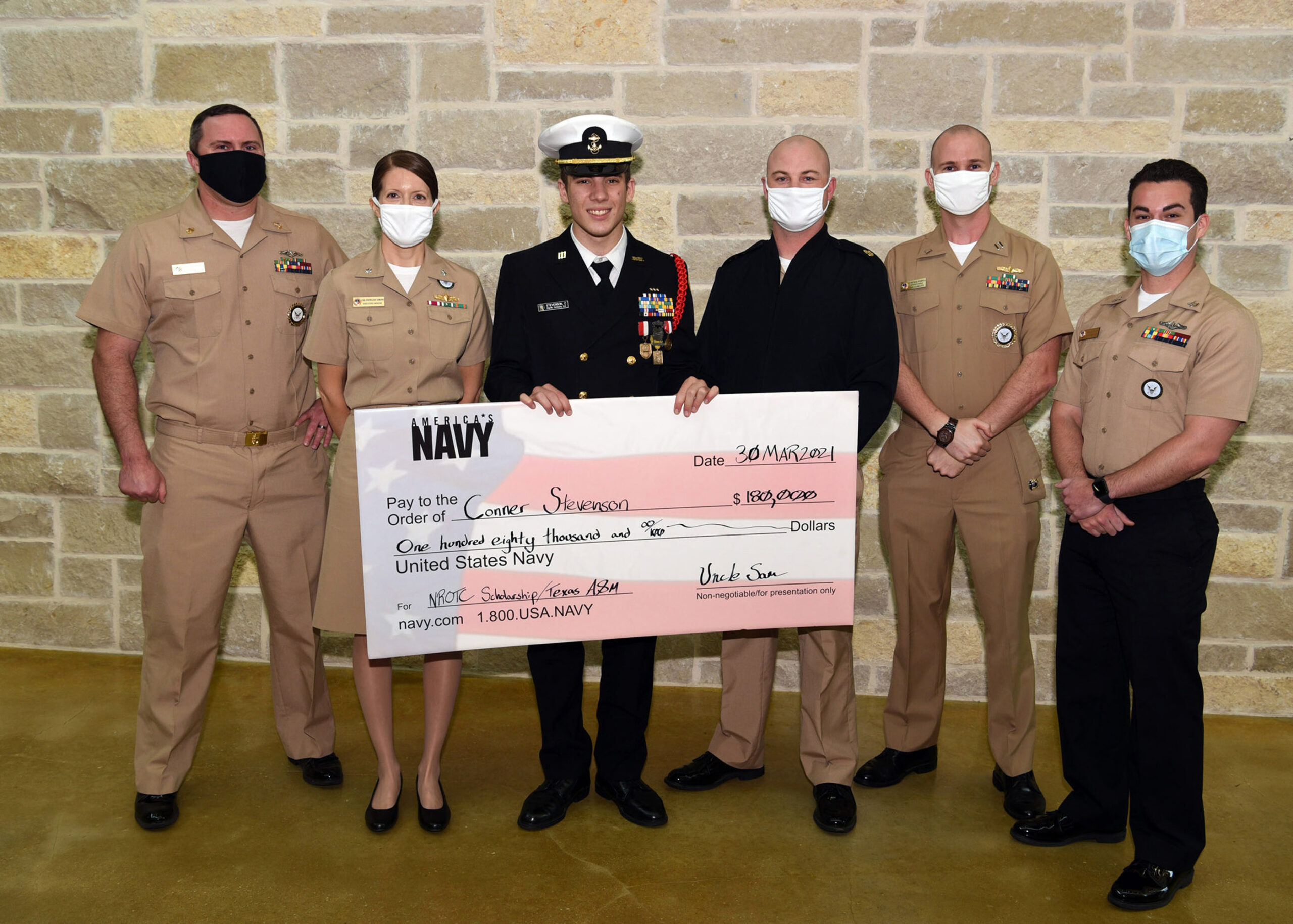
ROTC scholarships are one of the best financial deals in American higher education, and a surprising number of them go unused every year. That sounds like a contradiction. It isn’t. I came up through Navy OCS in Newport, so I took the long way to a commission — I paid my own way through school first, then earned my gold bars the hard way. Looking back at what my classmates in NROTC (Naval Reserve Officers’ Training Corps, the college program that commissions officers alongside their degree) walked away with, I understand why people who know the system push it so hard.
Here’s the short version of the money. A national scholarship can cover full tuition. Many programs add room and board, or a housing allowance at schools that don’t. On top of that comes a monthly stipend during the school year, plus money for books. Stack that against a decade of student loan payments and it stops being a close call.

Why ROTC Scholarships Go Unused
The first answer is that they aren’t unlimited. Scholarships are allocated by school and by program, and the national boards are genuinely competitive. You’re not competing against a vague standard — you’re competing against other applicants for a fixed number of seats at a specific unit.
The second answer is stranger. Some scholarships go unused at particular schools, and historically Black colleges and universities are the example that comes up most — Tennessee State University gets mentioned a lot in these conversations, and it has a long, proud military commissioning history. The seats exist. The qualified applicants who knew to apply for them didn’t.
That gap usually comes down to awareness. A kid whose parents never served has no reason to know that a college’s ROTC unit has scholarship money sitting there, or that the application runs on its own timeline — often starting junior year of high school, well before the regular college applications. Miss the window and you’ve missed the board. Nobody sends a reminder.
The third reason is the one people don’t say out loud: the service obligation. A scholarship graduate owes a commitment that generally runs about eight years, split in some combination of active duty and reserve time depending on the program and the year. That’s a real thing to sign up for at seventeen. Some families hear “eight years” and stop listening to the part about a guaranteed job with a paycheck and health coverage the day after graduation. The exact terms vary by service and by year — confirm the current obligation with your recruiter or the latest NAVADMIN before you sign anything.
What You Actually Get From an ROTC Scholarship
Money is the headline. The rest is the part that compounds.
- Tuition coverage, often full, at the schools that host a unit
- Room and board or a housing allowance at many of them
- A monthly stipend during the academic year, plus a book allowance
- A commission as a military officer the day you graduate, with a job waiting
- Four years of leadership reps — leading peers your own age — before you ever report to a command
That last one matters more than applicants realize. When I got to my first command as an ensign, I’d learned to lead in a compressed, sink-or-swim environment. The NROTC folks had been doing it for four years — running divisions, planning training, getting chewed out and fixing it. There’s a confidence that comes from having already been in charge of something. It shows up in a wardroom.
It also shows up on a resume after the Navy. Employers read “military officer” and understand they’re getting someone who’s held responsibility, managed people, and worked under pressure. That’s true whether you came from ROTC, OCS, or the Naval Academy — but ROTC gets you there with a degree and without the debt.

ROTC vs. OCS: Two Roads to the Same Commission
I’m not going to pretend OCS was the better path. It was the path available to me, and I’m proud of it — twelve weeks at Newport, no college unit, no head start. If you’re already in college or already graduated, OCS is your door, and it’s a good one. The full process is laid out in our Navy OCS Journey guide if that’s where you are.
But if you’re a high school junior or senior and you’re open to serving, ROTC is the smarter sequence. You fund four years of school, you build leadership experience while your peers are figuring out how to do laundry, and you commission on graduation day instead of scrambling for a slot afterward. The trade-off is the obligation and the structure — ROTC isn’t a club. There’s PT (physical training) before class, summer training cruises, and standards you have to keep meeting.
One more note on commissioning sources, because people get confused. ROTC and OCS both produce the same officer. The gold bars don’t say which door you came through. What differs is when you start, what you pay, and how much time you spend learning to lead before you’re expected to.
How to Actually Win One
Start early — the national scholarship application typically opens in the spring of your junior year of high school and closes in the winter of your senior year. Talk to the recruiting officer at the ROTC units on the campuses you’re considering, not just the national office. A unit that has unfilled seats can tell you things a website won’t. Apply to schools that host a unit even if you’re not sure yet; you can decline later. And if you don’t win the national scholarship, ask about campus-based scholarships and the college program, which can lead to the same commission through a different funding route.
If you’re on the fence because nobody in your family has worn the uniform, that’s exactly the reason to make a phone call. You don’t have to have this figured out. You just have to ask before the board closes. Good luck — and if you end up at OCS instead, we’ll see you in Newport.