Last updated: August 16, 2026
Getting a Head Start on OCS Navigation: What to Know Before You Go
One of the questions I get most often from future officers is about the navigation portion of OCS – specifically the maneuvering board and navigation test. When I went through OCS in Newport, I remember the scuttlebutt (rumors) making it sound far more intimidating than it actually was. The truth is, the school teaches you everything from scratch, but a little OCS navigation preparation can go a long way in building confidence before you step into the classroom. Let me walk you through what I learned and what you can do now to get a solid foundation.
What the Navigation Test Covers
The navigation portion at OCS isn’t about memorizing every buoy or chart – it’s about understanding the fundamentals of relative motion and the rules of the road. You’ll work with a MOBOARD (maneuvering board) to solve three types of problems: CPA (Closest Point of Approach), stationing, and wind problems. These might sound complicated, but they’re all just geometry and vector addition. The test itself is timed, so speed and accuracy come with practice.
A shipmate of mine in the cryptologic community (we went through OCS together) had never touched a maneuvering board before, but he drilled the basics over a weekend and aced the test. The key is getting comfortable with the tools and the process.
Why OCS Navigation Preparation Matters
While the instructors will teach you everything, walking in with some familiarity reduces the stress. You don’t need to become an expert – just give yourself a head start. The main areas to focus on are:
- COLREGS (International Regulations for Preventing Collisions at Sea): Know the rules of the road, especially navigation lights. This is foundational and shows up not just in the navigation test but in daily shipboard life.
- Maneuvering Board (MOBOARD) basics: CPA problems are the most common. Understand how to plot own ship’s course and speed, and the contact’s relative motion.
- Tools: A quality compass (circles, not a standard drawing compass), a slide ruler (like Weems & Plath), a sharp pencil, and a good eraser. You don’t need to buy special MOBOARD paper – they’ll provide that during instruction.
By the time I made Lieutenant, I’d used these skills more times than I could count – especially during joint exercises where we had to coordinate multiple ships. The practice you put in at OCS pays off.
How to Practice Effectively
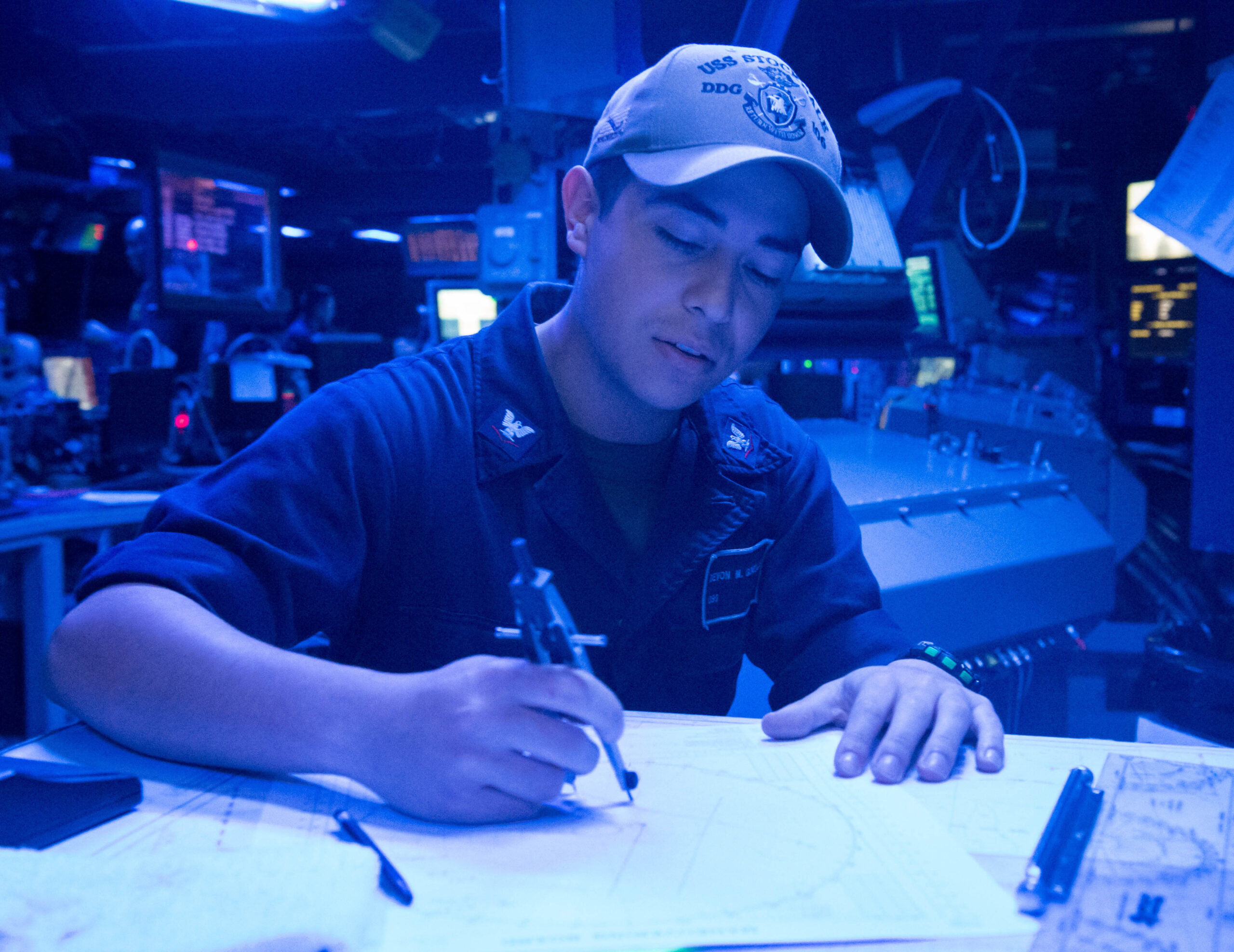
You can find sample MOBOARD problems online or pick up a basic navigation workbook. Focus on CPA problems first – they are the bread and butter. Here’s a simple drill:
- Set up your maneuvering board with own ship at the center (or use the provided origin).
- Plot a contact’s initial position and course/speed.
- Calculate the CPA – the closest point the contact will come to you.
- Repeat with different own ship courses to see how the CPA changes.
Time yourself. Aim to finish each problem in under five minutes initially; you’ll get faster. And remember – accuracy beats speed. A wrong answer is worse than a slower correct one. I still remember my instructor’s voice: “Slow is smooth, smooth is fast.”
For COLREGS, get a copy of the rules and focus on Part B (Steering and Sailing Rules) and Annex I (Positioning and Technical Details of Lights). Flashcards help. There are even smartphone apps that quiz you on navigation lights – great for downtime during OCS prep.
What NOT to Worry About
Don’t stress about buying expensive gear or trying to memorize every detail of the MOBOARD manual. OCS is designed to take you from zero to proficient. I’ve seen candidates show up with binders full of printouts they never used. Your energy is better spent staying in shape, getting your paperwork squared away (organized), and relaxing before the intensity starts. The navigation portion is a challenge, but it’s one you can master with deliberate practice.
For a broader look at the entire OCS experience, check out the Navy OCS Journey hub for more articles like this one.
Final Thoughts from the Fleet
When you get to OCS, embrace the navigation training. Yes, it can be a lot to absorb in a short time, but every officer before you has walked that same path. Lean on your classmates, ask questions, and don’t be afraid to make mistakes on the practice boards – that’s what the training time is for. By the time you commission, you’ll be reading a maneuvering board with the same confidence you have reading a road map. I promise you that.
The fact that you’re already looking into OCS navigation preparation tells me you’ve got the right attitude. Keep that initiative, trust the process, and I’ll see you in the fleet.
This post is part of My Navy OCS Journey — the whole twelve weeks, week by week.