
Navy conditional release is the paperwork that decides whether an active-duty sailor can leave early to commission in another branch, and it’s the question I get more than almost any other from senior enlisted folks eyeing a gold bar. The short answer: it’s possible, it’s rare, and it starts with a single form — DD Form 368, Request for Conditional Release. If you’re an E-6 with a few years left on your contract and a commissioning offer from the Air Force or Space Force in your back pocket, this is the road you have to walk. Let me tell you what that road actually looks like.
What a Navy Conditional Release Actually Is
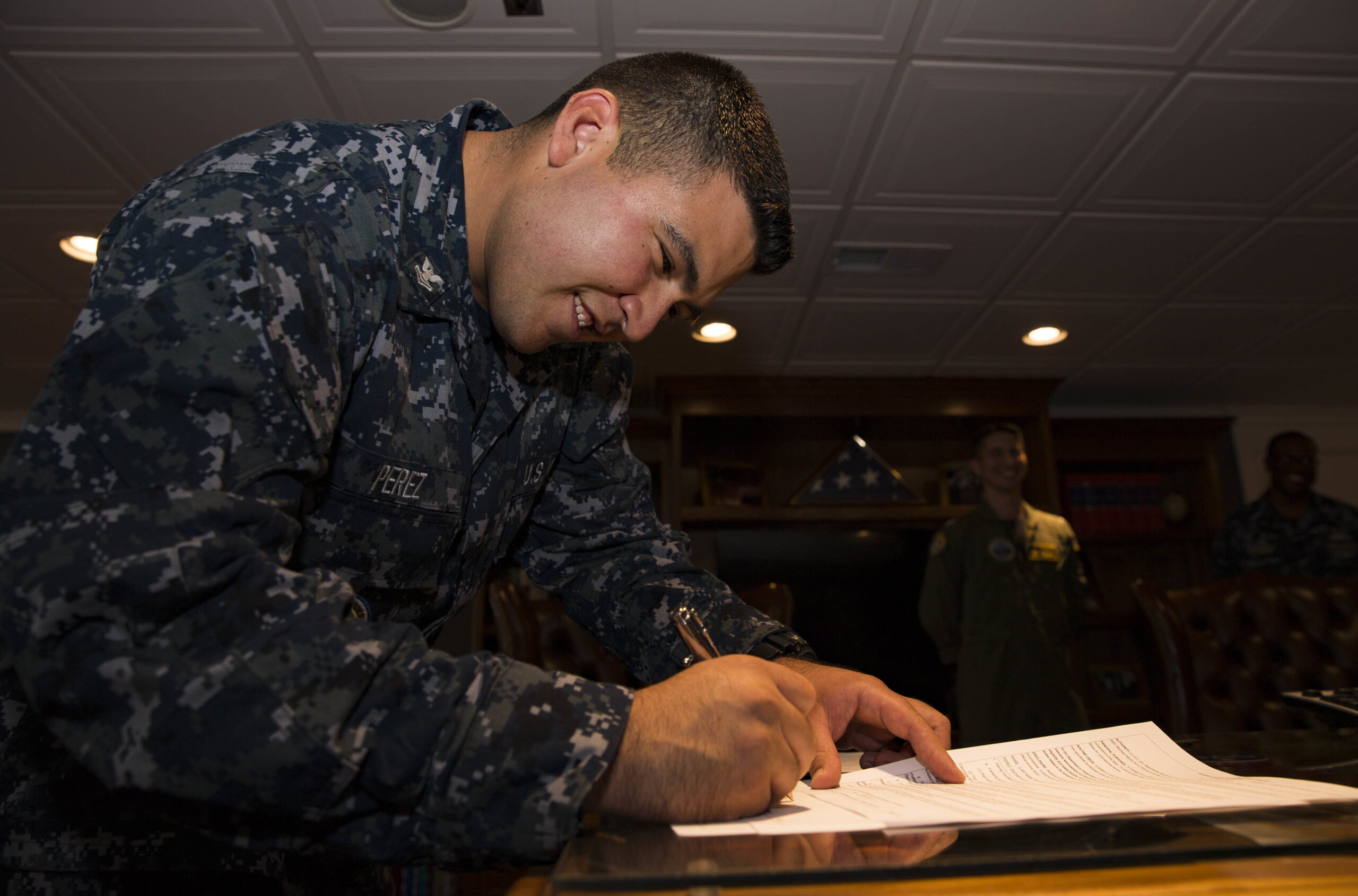
DD Form 368 is a formal request to your current branch asking permission to be released from your enlistment obligation so another service can commission you. Without it, the other branch can’t touch you — you’re still Navy property until your EAOS, which is your Expiration of Active Obligated Service (the date your current enlistment contract runs out).
The form itself is simple. The chain of command endorsement behind it is not. Your request goes up through your division, your command, and eventually to Navy Personnel Command — PERS — where a detailer and a community manager decide whether losing you is worth it. That’s the whole ballgame.
Why PERS Usually Says No
Here’s the gouge (insider advice) I wish someone had handed me as a young petty officer: PERS doesn’t release sailors because the sailor wants to go. They release sailors when releasing them benefits the Navy. Those are two very different things.
NAVADMIN 142/22 is the policy message most often cited on this topic, and it lays out the framework for how conditional release requests are evaluated. The general pattern is that a PERS denial is the default outcome unless your request fits a narrow set of circumstances — a critically undermanned rate, a bad fit for a commissioning program you’d otherwise be perfect for, or a timing situation where the Navy simply doesn’t need you much longer anyway. Confirm the current version of that instruction with your command career counselor, because NAVADMINs get superseded and the specifics shift.
A shipmate of mine in the cryptologic community tried this exact move a few years back — Air Force commissioning offer in hand, three years left on his contract. PERS denied it in under a month. No explanation beyond the standard language. He ended up finishing his enlistment and commissioning through a Navy program instead, and honestly he was better off for it.

Timing Matters More Than You Think
If you’re two or three years out from EAOS, your odds are close to zero. The Navy has no incentive to let you walk early when they’ve got years of return on their training investment still coming. The closer you get to your EAOS — think months, not years — the more the math starts to work in your favor, because you were leaving soon anyway.
That doesn’t mean wait until the last minute to start. It means understand that the timing of your request is part of the argument. A request submitted at eighteen months out reads very differently to a detailer than one submitted at six months out.
- Talk to your Unit Career Counselor (UCC) or Command Career Counselor (CCC) first — they know the local process and can tell you whether your rate is currently on any do-not-release list.
- Loop in your detailer early. Your detailer is the person who actually has to sign off on losing you, so treat that relationship like it matters, because it does.
- Get your chain of command on board before the paperwork moves. An OIC (Officer in Charge) or CO endorsement that says “this sailor is a loss we can absorb” carries real weight.
- Have the receiving branch’s offer in writing. A verbal “we’d love to have you” from a USAF or USSF recruiter won’t survive contact with PERS.

The Alternative: Commission Inside the Navy
Before you spend months chasing a conditional release, ask yourself the harder question: do you want to be an officer, or do you want to be in a different branch? If it’s the first one, the Navy has commissioning paths for active-duty enlisted sailors that don’t require anyone’s permission to leave. Officer Candidate School, the Seaman to Admiral-21 program, and various designator-specific pipelines all exist for exactly this purpose. I commissioned through OCS myself, and I’ve watched plenty of E-6s do the same.
If you want to explore that route, start with the Navy OCS Journey hub — it walks through the application, the board, and what Newport is actually like. For a lot of sailors, that’s the more realistic path, and it keeps your enlisted time counting toward your career instead of throwing it away.
When the Interservice Transfer Makes Sense
There are legitimate reasons to pursue an interservice transfer instead. Maybe you’re chasing a career field the Navy doesn’t offer — certain space operations billets, specific USAF intelligence roles, or a specialty that maps cleanly to USSF commissioning. Maybe your family situation makes a particular base or region the only viable option. Those are real arguments, and they’re the kind of arguments that occasionally move a PERS reviewer.
But be honest with yourself about the odds. A conditional release is a request, not a right. Plan for the denial, have a Navy commissioning application running in parallel, and don’t burn bridges with your chain of command while you’re asking them for a favor.
None of this is easy, and the answer you get from PERS won’t always feel fair. But you’re an E-6 — you’ve already done the hard part of proving you can lead. Whether the gold bar comes from the Navy or another branch, the fact that you’re asking this question at all says you’re ready for it. Square away the paperwork, talk to your career counselor, and keep moving. The commission is out there.